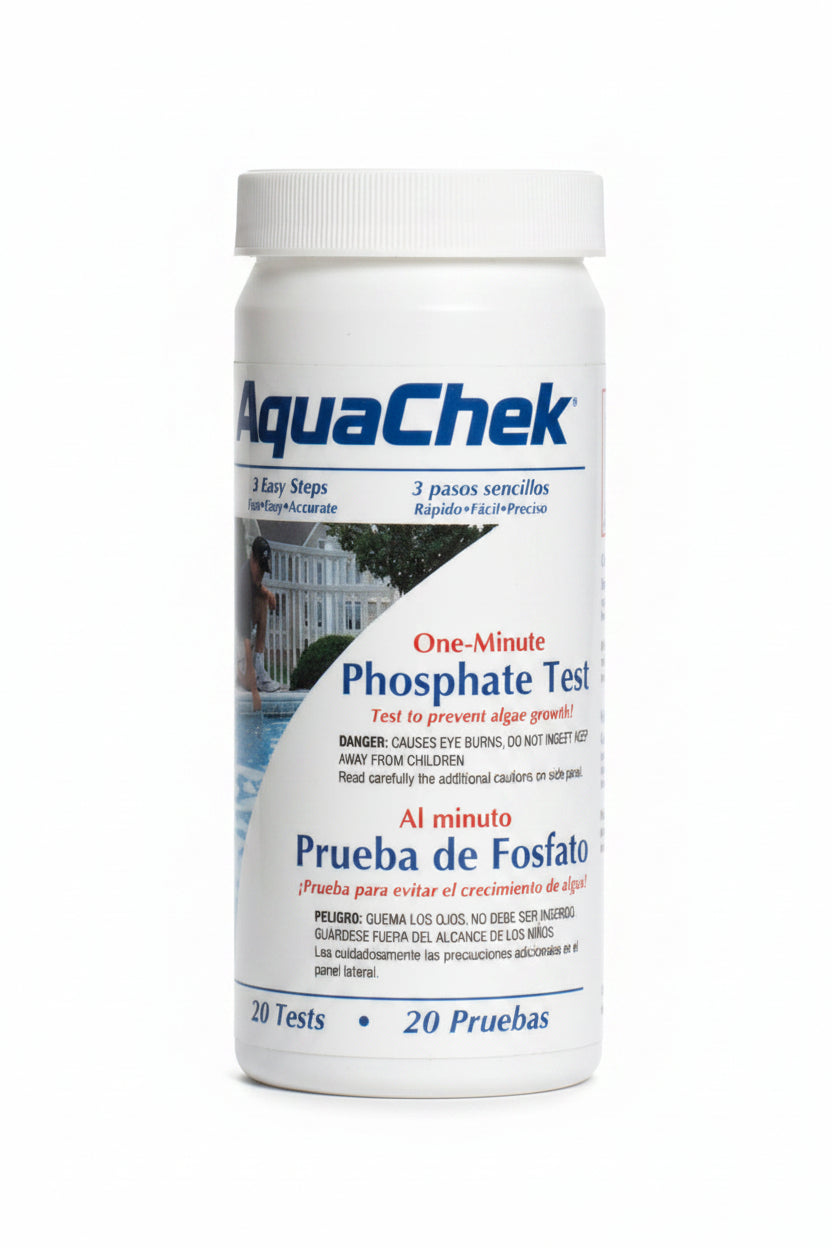
AquaChek
AquaChek 1 Min Phosphate Test
AquaChek 1 Min Phosphate Test
Couldn't load pickup availability
AquaChek 1 Min Phosphate Test is a single-strip phosphate test for hot tub and spa water. It tells you in 60 seconds whether your phosphate level is high enough to cause foam, kill sanitizer faster than it should, or feed algae blooms in your spa.
Why phosphates are a hidden problem: Phosphates enter spa water from many sources — tap water itself (some municipalities add phosphate as a corrosion inhibitor), well water, lawn fertilizer carried in on bare feet, body care products, and even some scale-control chemicals. Once dissolved, phosphates feed algae and dramatically speed up the consumption of chlorine and bromine — meaning you'll burn through sanitizer faster, see persistent low readings on your test strip, and notice unexplained foam. Salt water spas (Onzen, Spa Boy) are especially sensitive because phosphates can short out the salt cell's chlorine-generation capacity.
When to use it: Test for phosphates whenever you're seeing unexplained foam, sanitizer that disappears faster than it should, or a salt water spa that struggles to hold an output reading. Also test annually after a fresh fill, especially if your fill water comes from a well or from a municipality that uses phosphate corrosion control. Most spa owners only think to test phosphates when something's wrong — building a baseline reading on a fresh fill saves you guesswork later.
How to use it: Dip the strip into the spa water for 1 second, remove, and hold flat (don't shake the water off). Wait exactly 60 seconds, then compare the test pad colour to the chart on the bottle. Anything above 50 ppm means it's time to add a phosphate remover.
Quick tips:
- If your reading is above 50 ppm, treat with a phosphate remover, then retest in 24 hours to confirm levels have dropped before re-balancing chlorine or bromine
- Don't store the strips in a damp bathroom — humidity kills the test pad before you ever dip it
- Single-test strips have a shelf life — check the expiry date on the bottle if your readings start looking inconsistent
Share